Jewelry Website UX: Why Customers Hesitate Before Buying Expensive Jewelry Online
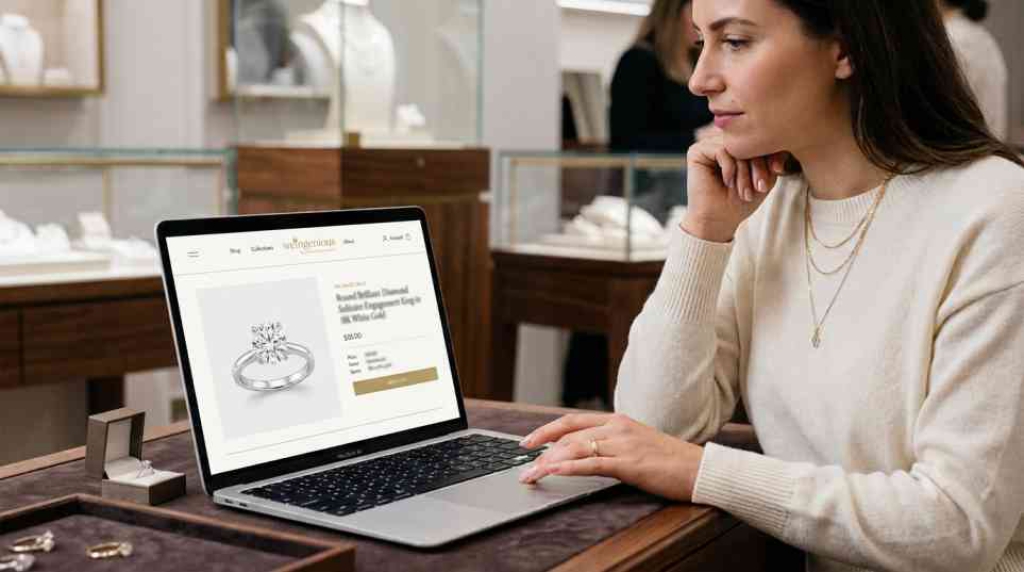
A customer finds the perfect ring online. They look at the photos, check the price, and imagine wearing it. Everything seems right. But then they close the website without buying.
Why?
For expensive jewelry, a beautiful website is not always enough. Customers need to feel sure about the product, the seller, the price, delivery, and what will happen if something goes wrong.
This is why good Jewellery Website development should focus on more than attractive design. It should help customers make a confident buying decision.
When shoppers cannot understand the quality of a product, trust the seller, or see what happens after payment, they may leave before completing the purchase.
Let us look at the main ways jewelry websites can reduce this doubt and make online shopping easier.
Make Product Pages Answer the Questions Buyers Cannot Ask in Store
When customers visit a physical jewelry store, they can ask a salesperson questions. Online, they cannot always do this.
Your product page needs to answer those questions clearly.
Replace Guesswork with Clear Product Details
A jewelry product page should explain the important details in simple language.
For example, tell customers:
What metal is used
What type of stone is included
Stone quality and grade
Ring or jewelry dimensions
Product weight
Setting type
Care instructions
Certification details
Customization options
Also explain what affects the price. A customer may see two rings that look similar but have very different prices. Explain why.
The information that helps customers make a decision should appear close to the price and purchase button. Do not hide important details inside a long FAQ page.
Help Shoppers Judge Size, Color, and Quality
Customers cannot touch jewelry through a screen. Good images can help reduce this problem.
Use clear photos from different angles. Add close-up images of stones and settings. Short videos can also show how the jewelry looks when it moves.
Show the product on a hand, neck, wrist, or ear when possible. This helps shoppers understand its real size.
A size chart should also be easy to find. Clearly explain measurements and tell customers that colors may look slightly different depending on the screen.
Learn from Leading Jewelry Websites
Jewelry retailers such as James Allen and Blue Nile provide useful examples of how online shoppers can inspect and compare jewelry.
James Allen is known for its detailed diamond viewing experience, which allows shoppers to examine stones closely. Blue Nile also provides diamond education and comparison features that help shoppers understand different choices.
The important lesson is not to copy another website. Instead, ask what information helps customers feel more confident.
A useful test is simple: show your product page to someone who knows nothing about the jewelry. Ask them what questions they still have before buying.
Those questions can show you exactly what your product page is missing.
Build Trust Before Asking for a High-Value Purchase
Trust is one of the biggest parts of online jewelry shopping.
A customer may be comfortable spending $30 online without much research. Spending $1,000, $5,000, or more is different.
Make the Seller’s Proof Easy to Find
Your website should make it easy for customers to understand who they are buying from.
Show:
Business contact information
Physical store locations, if available
Customer reviews
Certifications
Secure payment information
Company information
Sourcing information where relevant
Do not depend only on trust badges. If you display a certification or security badge, explain what it means and link to useful information when possible.
Customers should not have to search the entire website to find proof that your business is legitimate.
Reduce Risk with Clear Policies
Return and warranty policies are especially important when selling expensive jewelry online.
Clearly explain:
Return period
Refund process
Resizing options
Warranty coverage
Repair services
Return shipping costs
Insurance for returned jewelry
Custom jewelry rules
A short policy summary can appear near the product and checkout. Customers can then open the full policy if they want more information.
Clear policies reduce uncertainty and help shoppers understand the risks before they buy.
Use Social Proof That Helps Buyers Decide
Reviews are more useful when they contain real details.
Instead of showing only “Great product,” encourage customers to talk about:
Product quality
Ring fit
Stone appearance
Delivery
Packaging
Customer service
Overall buying experience
Customer photos can also be valuable when you have permission to use them.
Do not hide every negative review. Customers often trust a website more when reviews look genuine. A thoughtful response to negative feedback can also show that the company takes customer concerns seriously.
Make the Price and Purchase Path Feel Clear
A high price does not always stop a customer from buying. Unclear value often does.
Explain the Value Behind the Price
Help customers understand what they are paying for.
Explain factors such as metal weight, stone quality, craftsmanship, certification, and custom work.
You can also offer side-by-side comparisons between similar pieces. This helps customers understand why one product costs more than another.
If you offer financing, show the full terms clearly. Customers should know the payment amount, fees, interest, and total cost before they make a decision.
Remove Checkout Surprises
Unexpected costs can quickly damage customer trust.
Show shipping costs, taxes, estimated delivery dates, and possible duties as early as possible.
Keep the checkout process simple. Avoid asking for information you do not need.
Guest checkout can also help customers complete purchases without creating an account first.
Before payment, give shoppers a final chance to check important information such as:
Ring size
Engraving
Product quantity
Delivery address
Shipping method
Final price
Use Cart Data as a Clue, Not a Diagnosis
Baymard Institute reports an average online cart abandonment rate of 70.19%, based on 49 studies. This is a broad ecommerce benchmark, not a jewelry-specific number.
For jewelry businesses, the useful question is not simply, “Why are people abandoning carts?”
Instead, find out where they leave.
Do customers leave on the product page? During shipping? At payment? When they see the final price?
Test one improvement at a time. For example, make delivery dates clearer and measure what changes.
Show the Jewelry in Real Life and on Real People
Jewelry can look very different on a product page compared with real life.
Make Scale and Fit Easy to Picture
Show jewelry on real people whenever possible.
For rings, show the ring on a hand. For necklaces, show the chain on a neck. For earrings, show them on an ear.
Using different skin tones can also help more shoppers imagine how the jewelry may look on them.
Include familiar measurements such as:
Ring width
Stone size
Chain length
Pendant dimensions
Product weight
A printable size guide and simple instructions for measuring at home can also reduce sizing problems.
Use Interactive Tools with Care
Features such as 360-degree views, zoom, videos, and virtual try-on can improve the shopping experience.
But these features should provide useful information rather than simply look impressive.
Always keep standard product images available. Some customers may have slow internet connections or may not want to use interactive tools.
Mobile performance is also important. A beautiful product page is not useful if it takes too long to load.
Give Buyers Help Before and After They Pay
Sometimes customers only need one answer before they buy.
Offer Support at the Point of Doubt
Add live chat, phone support, or a callback option near important purchase decisions.
For example, a customer may need help choosing a ring size or understanding a diamond certificate.
Make it easy to get expert help without forcing customers into a sales conversation.
Your support team should explain products, sizing, delivery, returns, and care in simple language.
Set Clear Delivery and Aftercare Expectations
Customers should know when their jewelry will arrive.
Give a realistic delivery range and clearly explain longer lead times for custom-made pieces.
Also explain:
Gift packaging
Discreet shipping
Tracking
-
Latest Posts
-
Jewelry Website UX: Why Customers Hesitate Before Buying Expensive Jewelry Online

-
What Makes a Good Jewellery Website? 7 Key Features for Higher Sales
-
Jewelry Website Development in 2026: The Hidden Truth Most Agencies Won’t Tell You

-
Why Modern Businesses Need AI-Powered Web Development, ERP & Automation Services in 2026

-
What Is SEO? A Complete Beginner’s Guide to Search Engine Optimization

-