| Ranking Factor | Why It Matters | Example Impact |
|---|---|---|
| Content Quality | Google rewards helpful, original content | A clear 1,500-word guide ranks higher |
| Backlinks | Links from trusted sites build authority | Guest post links boost travel blog rankings |
| Mobile-Friendliness | Most users browse on phones | Non-mobile sites lose visitors |
| Page Speed | Faster sites keep users engaged | Site load time cut from 5s → 2s improved rankings |
| Relevant Keywords | Help Google match search intent | A blog ranks for “best running shoes” |
What Is SEO? A Complete Beginner’s Guide to Search Engine Optimization
Introduction
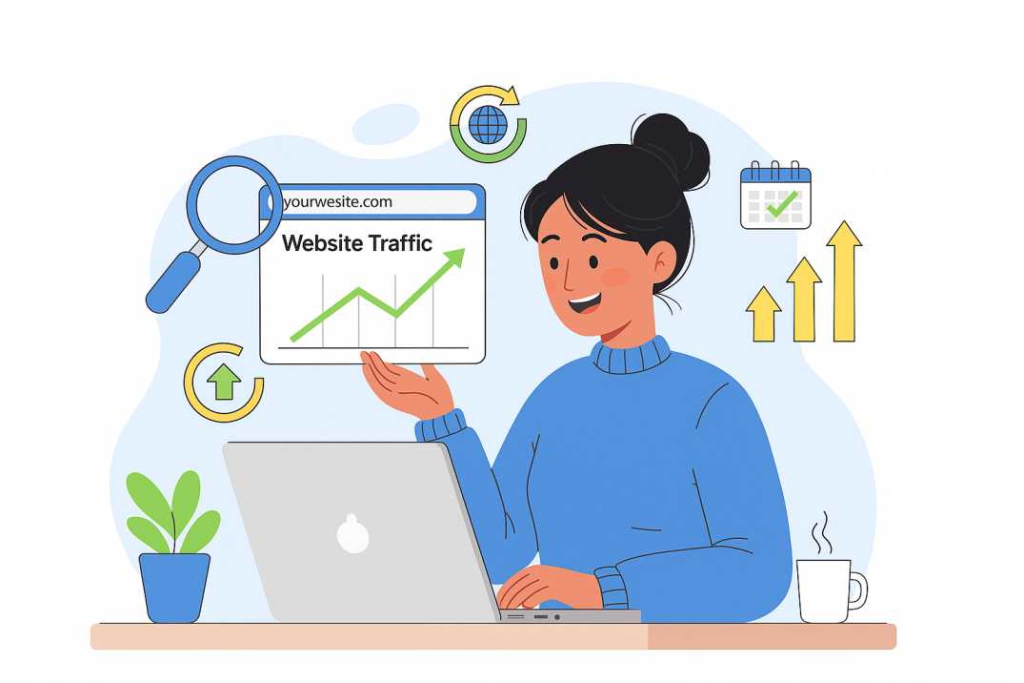
Imagine a small bakery owner named Asha. She loved baking cakes but struggled to attract customers. One day, she started learning the basics of SEO—how to make her website appear on Google. Within six months, her website traffic grew by 200%, and her shop began getting more orders than ever.
This is the power of SEO. Search Engine Optimization (SEO) means improving your website so that people can easily find it on Google and other search engines. In fact, in 2024, organic search drives 53% of all website traffic (BrightEdge).
If you are new to SEO, don’t worry. This guide will show you simple steps to get started and help your website grow.
Why SEO Matters for Beginners
SEO is important because it helps your website rank higher on Google without paying for ads. When your site shows up at the top of search results, you attract more visitors for free. For beginners, this means more traffic, more customers, and more growth—without needing a big budget.
The Role of Search Engines in Daily Life
Did you know that people make over 8.5 billion Google searches every day in 2024 (Internet Live Stats)?
Think about it: if someone is looking for a “coffee shop near me,” and your shop shows up first, they are more likely to visit you. That’s how search engines help small businesses connect with real customers.
Benefits of SEO Over Paid Ads
Many businesses spend money on ads, but the problem is—once you stop paying, the traffic disappears. SEO, on the other hand, gives long-term results.
For example, a small fitness blog made simple SEO changes like adding keywords and improving articles. Within six months, its traffic grew by 300%, saving them $5,000 in ads.
With SEO, you invest once, and your efforts keep paying back over time.
Common Myths About SEO
Many beginners think:
-
“SEO is too hard for me.”
-
“I need to be a tech expert.”
But these are just myths. As SEO expert Rand Fishkin says: “SEO is about understanding users, not tricking search engines.”
You don’t need to be a pro to start. The first simple step is to track your site’s performance using Google Search Console—a free tool that shows how your site is doing in Google search.
How Search Engines Work
Crawling and Indexing Basics
Google uses bots (called crawlers) to scan websites. These bots collect information and store it in Google’s index. Every day, Google crawls billions of pages, making sure new content is discoverable.
If your site is not indexed, it won’t appear in search results. That’s why submitting your sitemap to Google is so important.
Ranking Factors That Matter Most
Google uses over 200 factors to rank websites (Moz research). Below are some of the most important ones for beginners to focus on
Latest Posts
-
Jewelry Website UX: Why Customers Hesitate Before Buying Expensive Jewelry Online

-
What Makes a Good Jewellery Website? 7 Key Features for Higher Sales

-
Jewelry Website Development in 2026: The Hidden Truth Most Agencies Won’t Tell You

-
Why Modern Businesses Need AI-Powered Web Development, ERP & Automation Services in 2026

-
What Is SEO? A Complete Beginner’s Guide to Search Engine Optimization