How to Choose Between a Website and a Mobile App
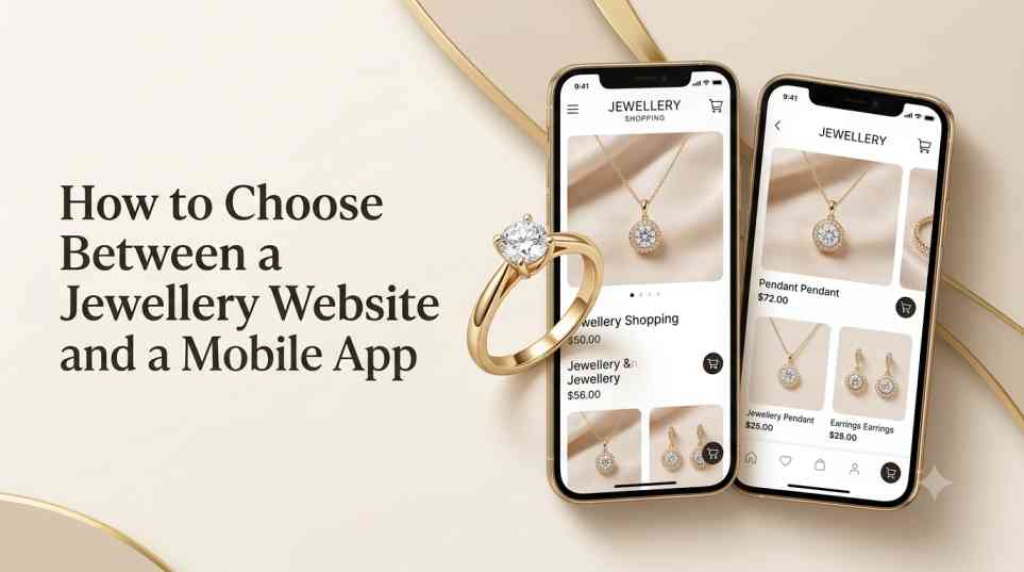
Imagine a customer sees a beautiful ring on social media. They open the link on their phone, check the price, and look at the photos. But they leave without buying anything. Would a mobile app have helped, or did the website need to be better?
This is a common question for jewellery businesses. Choosing the right platform is important for online growth. With the right jewellery website development services, a business can create a simple and useful shopping experience that helps customers find products, learn about them, and place orders with confidence.
But does every jewellery brand need a mobile app? Not always. The best choice depends on customer habits, business goals, budget, and how often people shop with the brand.
In this guide, we will compare jewellery websites and mobile apps, explain their benefits, and help you choose the right option for your business.
Start with How Jewellery Shoppers Buy
Before choosing a website or app, learn how your customers shop. Their buying habits can help you make a better decision.
Map the Path from Browsing to Purchase
Most jewellery shoppers follow a few steps before buying. They may find a product on social media, visit a website, compare prices, check product details, and then place an order.
Some customers buy jewellery for a special event, such as a wedding or anniversary. Others shop regularly for gifts or personal use.
First-time buyers usually need clear product information and trust signals before they make a purchase. Regular customers may want faster access to their favourite designs, saved items, and order details.
Understanding these differences will help you decide which platform offers the most value.
Find the Points Where Shoppers Drop Off
Not every visitor who opens your website will buy something. Some may leave because pages load slowly, product photos are unclear, or the checkout process is too long.
Check your website data to find where people leave. Look at product views, search activity, cart exits, and completed orders.
You can also ask customers simple questions. Do they need better size guides? Are they unsure about the quality of the metal or stones? Do they want more payment options?
Fixing these problems may improve sales without the need to build an app.
Compare the Reach and Cost of Each Channel
A website and a mobile app can both support online sales, but they work in different ways. Your choice should depend on how customers find and use your brand.
Use a Website to Reach More Shoppers
A jewellery website allows people to explore your products through Google search, social media, email links, and online ads. Customers do not need to download an app before they start shopping.
This makes a website a useful starting point for new jewellery businesses and brands that want to reach more people.
Adobe Digital Insights reported that smartphones accounted for 54.5% of US online sales during the 2024 holiday season. This figure shows why mobile shopping matters. However, it is a general online shopping figure, not a prediction of jewellery sales.
Your website should work well on small screens. Product images should load quickly, text should be easy to read, and buttons should be simple to use.
A professional website development company can help create a mobile-friendly website that supports product discovery and online purchases.
Reserve App Investment for a Clear Customer Need
A mobile app can be useful for jewellery brands with many returning customers. It may offer saved wish lists, order updates, loyalty rewards, and personal offers.
For example, a customer who often buys gifts from the same brand may enjoy using an app to view saved products and track orders.
However, building an app costs money. You must consider design, development, testing, updates, customer support, and app promotion. You also need to give customers a good reason to install and keep using it.
If most customers buy only once or twice a year, an app may not provide enough value to cover these costs.
Compare Results with Fair Measures
Do not choose a platform just because it looks modern. Compare its results with clear business measures.
Track these key numbers:
Mobile conversion rate: How many visitors place an order?
Average order value: How much does each customer spend per order?
Repeat purchase rate: How many customers return to buy again?
Customer acquisition cost: How much does it cost to get a new customer?
Active app use: How many people use the app after installing it?
The Baymard Institute reports that average online cart abandonment is around 70% across studies. This is a broad benchmark, not a result that every jewellery store should expect.
Check your own data to understand why shoppers leave. A shorter checkout, clear delivery charges, and more payment choices may help more than launching an app.
Match the Channel to the Jewellery Buying Experience
Jewellery is a product where appearance, quality, and trust matter. Customers often want to examine several details before spending their money.
Make Product Details Easy to Judge
Good product pages help customers understand what they are buying. Add clear photos from different angles, close-up images, metal details, stone information, and accurate prices.
Include size guides, care instructions, delivery details, and return terms. If you sell diamond jewellery, explain the available certification and quality information in simple words.
You can also test product videos, image zoom, and 360-degree views. These features can help customers see a design more clearly on both a website and an app.
The goal is not to add as many features as possible. It is to help customers make a confident buying decision.
Build Trust Around High-Value Purchases
Buying an expensive ring or necklace can take time. Customers may have questions about quality, delivery, repairs, and returns.
Make these details easy to find. Show clear contact information and offer live chat or store appointments if your business can support them.
Customer reviews, secure payment options, clear policies, and genuine product photos can also help build trust.
A mobile app will not automatically make people trust your brand. Trust comes from honest information, good service, and a smooth buying experience.
Add App Features Only When They Solve a Real Problem
An app should offer something useful that customers want to use again.
For a jewellery brand, useful features may include:
Saved wish lists for future purchases.
Order tracking and delivery updates.
Loyalty points and member rewards.
Alerts for new collections or saved designs.
Personal offers based on customer interests.
However, basic product details and checkout should not require an app download. Customers should be able to browse and buy easily through your website.
Learn from Jewellery Brands Already Selling Online
Looking at established jewellery brands can help you understand what works. Use these examples to find ideas, not to copy every feature.
Study James Allen's Product Viewing Tools
James Allen is known for its online diamond shopping experience, including browser-based 360-degree diamond views.
These tools help shoppers examine diamonds before buying. Customers can see more detail without visiting a physical store.
This is a useful lesson for jewellery businesses. A website can offer a rich product experience without asking customers to install an app.
Think about what your customers need to see. If close-up views help them choose a diamond, consider adding them to your website. Make sure the images load well and work smoothly on mobile phones.
Compare a Brand's Mobile Website and App
You can also study brands such as Tiffany & Co. and check whether their official app is available in your market.
Compare how customers find products, save favourites, get support, and move through checkout. Look for differences between the mobile website and app.
Do not assume that an app produces better sales simply because a well-known brand has one. Each business has different customers, budgets, and goals.
The best platform is the one that makes shopping easier for your target audience.
Apply an Expert Lens to the Decision
Steve Jobs once said, “You've got to start with the customer experience and work back toward the technology.”
This idea is useful when choosing between a website and an app.
First, identify the problem your customers face. Then decide which platform can solve it with less effort and cost.
For example, if customers cannot find the right ring size, improve the size guide. If regular buyers want faster order updates, an app may be worth testing.
Always start with the customer problem, not the technology.
Test the Choice Before Making a Large Investment
You do not need to make a large investment before learning what your customers want. Start with small improvements and test their results.
Improve Mobile Web Before Building an App
Check your website on different phones and screen sizes. Make sure pages load quickly, photos appear clearly, menus are easy to use, and checkout works without problems.
Review your product descriptions, size guides, payment options, and delivery information. Remove unnecessary steps that make shopping harder.
If you need help improving your online store, explore professional Digital Marketing Services to support search visibility, attract relevant visitors, and measure customer behaviour.
A strong mobile website can help both new and returning customers. It also gives you a better base for testing whether an app is necessary.
Run a Small App Trial When Repeat Use Is Strong
If your customers return often, test one useful app feature with a small group.
For example, you could test saved designs, loyalty rewards, or order updates. Ask users whether the feature helps them and whether they would use it regularly.
Set your success measures before starting the trial. Track active use, repeat orders, customer feedback, support requests, and cost per order.
If the trial does not show clear value, improve the feature or focus on your website instead.
Use a Simple Decision Rule
Use these points to guide your choice:
Choose a website first if you want to reach new customers through search engines, social media, and online ads.
Consider an app if customers return often and need features such as loyalty rewards, saved lists, or personal alerts.
Use both if each platform serves a different purpose and the business results justify the extra cost.
You do not need to follow every new trend. Choose the option that best supports your customers and business goals.
Choose the Channel That Makes Buying Easier
Make the Decision from Customer Evidence
The right choice should come from real customer behaviour, not guesswork. Use website data, customer interviews, feedback, and small tests to understand what people need.
If shoppers struggle to find products, improve navigation and search. If they leave because they cannot judge product quality, add better photos and more detail. If loyal customers want easier access to their orders and rewards, consider testing an app.
Review your results regularly because customer habits and business needs can change over time.
Keep the Next Step Clear
For most jewellery businesses, a well-designed mobile website is a sensible starting point. It can reach new shoppers, display products, build trust, and support online purchases without requiring an app download.
Start by finding the weakest part of your mobile buying journey and fixing it. Then measure the results.
Build an app only when customer feedback and business data show that it can offer clear value beyond a strong website.
The best platform is not the one with the most features. It is the one that makes buying jewellery simple, safe, and convenient for your customers. Frequently Asked Questions
1. Is a jewellery website better than a mobile app?
A jewellery website is often the best starting point for a business that wants to reach new customers through Google, social media, and online ads. A mobile app may be more useful for brands with regular customers who want features such as saved wish lists, loyalty rewards, and order updates.
2. How much does jewellery website development cost?
The cost of jewellery website development depends on the design, number of products, payment options, and features you need. A simple online store usually costs less than a custom website with advanced product views, filters, and other shopping tools. Ask developers for a clear quote based on your business needs.
3. Why does a jewellery business need a mobile-friendly website?
A mobile-friendly website allows customers to browse jewellery, view product photos, check prices, and place orders using their phones. It also helps customers find your products through search engines and social media without downloading an app.
4. What features should a jewellery website have?
A good jewellery website should include clear product photos, detailed descriptions, size guides, metal and stone information, secure payment options, delivery details, and a clear return policy. Product filters, customer reviews, wish lists, and live support can also improve the shopping experience.
5. When should a jewellery brand build a mobile app?
A jewellery brand should consider building a mobile app when many customers return regularly and need features such as loyalty rewards, saved designs, personal offers, or order tracking. Before investing, test customer demand and compare the expected benefits with the cost of building and maintaining the app.
6. Can a jewellery website help increase online sales?
Yes. A well-designed jewellery website can help increase sales by making products easy to find, showing clear product details, building customer trust, and providing a simple checkout process. Fast page loading, mobile-friendly design, and clear delivery and return policies can also help reduce buying barriers.
7. What are jewellery website development services?
Jewellery website development services help businesses create and improve online jewellery stores. These services may include website design, product catalog setup, payment integration, mobile optimization, product filters, security, and checkout improvements.
8. Should a jewellery business use both a website and a mobile app?
A business can use both when each platform offers clear value. A website can attract new shoppers, while an app can support loyal customers with rewards and personalized features. However, businesses should compare costs and results to make sure maintaining both platforms is worthwhile.
Latest Posts
-
How to Choose Between a Website and a Mobile App
-
What Makes Jewellery Website Development Different From Other eCommerce Websites?
-
Jewelry Website Development in 2026: The Hidden Truth Most Agencies Won’t Tell You
-
Why Modern Businesses Need AI-Powered Web Development, ERP & Automation Services in 2026

-
What Is SEO? A Complete Beginner’s Guide to Search Engine Optimization