Jewelry Website Development: A Simple Guide to Secure Payment Gateways
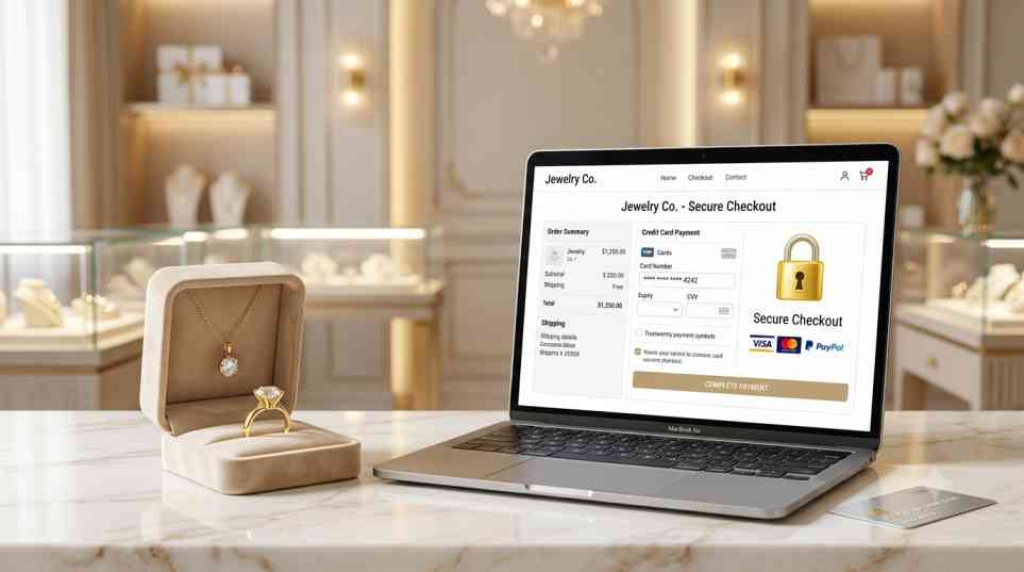
Buying jewelry online is a big decision. Customers often spend a large amount of money and share personal details when they place an order. This is why jewelry website development should focus on both safety and ease of use. A secure payment gateway helps protect payment details and makes checkout easier for buyers.
A small checkout problem can make a customer leave without buying. Baymard Institute has reported an average cart abandonment rate of 70.19%, based on 49 studies. This figure covers many types of online stores, not just jewelry businesses. Also, checkout problems are only one reason why people leave their carts.
In this guide, you will learn how to choose a secure payment gateway, protect customer data, reduce payment fraud, and test your jewelry website before accepting real orders.
1. Choose the Right Payment Gateway for Your Jewelry Store
A payment gateway helps your website accept online payments. It sends payment details securely to the payment provider and helps process the transaction.
For a jewelry store, choosing the right gateway is important because orders may have a high value.
Compare Fees, Payment Options, and Support
Before choosing a gateway, compare the following points:
Transaction fees: Check how much the provider charges for each payment.
Monthly fees: Find out if there are extra monthly or setup costs.
Payout time: Check when the money will reach your business account.
Payment options: Look for card payments, digital wallets, and installment options if your buyers need them.
International payments: Check whether the gateway supports your target countries and currencies.
Customer support: Choose a provider with support hours that fit your business needs.
Also, ask how the provider handles refunds, payment disputes, and large orders.
Do not choose a gateway based only on low fees. Good support, strong security, and reliable payment processing are also important.
Check Security and Compliance
A trusted payment gateway should offer useful security features, such as fraud screening, tokenization, and support for 3-D Secure where available.
PCI DSS is a security standard for protecting payment account data. Ask your payment provider which security tasks your business must complete.
Your duties may depend on how payments are handled on your website. Using a hosted checkout page can reduce some security work, but it does not remove every responsibility.
Choose a Gateway That Works With Your Platform
Check whether your ecommerce platform supports the payment gateway through an approved plugin or integration.
Review setup costs, update needs, and checkout design limits. You can also review the public checkout flows of jewelry retailers like Blue Nile and Brilliant Earth for ideas. Record the date of your review because website features can change.
2. Build a Checkout That Protects Customer Data
A safe checkout helps customers feel more confident when they buy jewelry online.
Keep Card Details Away From Your Server
One useful step is to avoid handling card details directly on your website.
You can use a hosted payment page or secure payment fields provided by your gateway. These options can send card details directly to the payment provider.
Follow these simple practices:
Do not store full card numbers on your website.
Use payment tokens for saved payment methods.
Never put card details in emails, order notes, or customer support messages.
Keep payment data out of website logs and analytics tools.
If your store allows saved cards, explain how the feature works and use the gateway's approved process.
Secure Your Website and Staff Accounts
Security is not only about payments. Your full website needs protection.
Use HTTPS across your website, including product pages, shopping carts, and checkout pages.
You should also:
Enable multi-factor authentication for staff accounts.
Give each team member only the access they need.
Update your website platform, themes, plugins, and payment code.
Remove unused plugins and tools.
Keep regular backups and review access logs.
These steps help lower the risk of account misuse and website attacks.
Make Checkout Easy to Understand
Customers should know what they are paying for before they place an order.
Show product prices, shipping costs, delivery estimates, and return terms clearly. For expensive jewelry, explain any extra identity checks before checkout when possible.
Keep payment forms short and simple. If a payment fails, show a clear message and tell the customer what to do next.
Avoid messages that show technical errors or sensitive system details.
3. Reduce Payment Fraud Without Losing Good Buyers
Jewelry stores can be targets for payment fraud because some products have high resale value.
However, blocking every unusual order can also hurt sales. Your goal should be to identify risky payments while treating genuine customers fairly.
Set Clear Risk Rules for Large Orders
Your payment gateway may offer tools to flag suspicious orders.
You can review orders that have warning signs, such as:
Billing and shipping details do not match.
An order is much larger than usual.
Several payment attempts fail.
Many orders arrive within a short time with similar details.
These signs do not always mean fraud. For example, a customer may send a gift to another address.
Create clear rules for manual checks, order holds, and order approval. Train your team to follow the same process.
Use Extra Security Checks Carefully
3-D Secure can add another step to some card payments. It may help reduce certain risks, depending on the payment setup and market.
Ask your gateway how address checks, device signals, and fraud scores affect payment approvals.
Also, track false declines. A false decline happens when a genuine customer's payment is blocked.
Review both fraud losses and payment approval rates. Strong security should help protect your business without creating too many problems for real buyers.
Learn From Real Examples
Look for public case studies from payment providers that explain how retailers improved fraud screening or handled payment growth.
Check the original source before using any numbers or results in your blog.
Compare the example with your own order value, sales locations, and return rate. What works for a large jewelry brand may not work for a small online store.
For better results, ask a payment or security expert to review your risk rules.
4. Test Your Payment Integration Before Launch
Before accepting real orders, test the complete payment process.
A payment button may look correct but still have problems behind the scenes.
Test Different Payment Situations
Use your gateway's test environment, also called a sandbox, to check different payment situations.
Test:
Successful payments
Failed and declined payments
Refunds and cancellations
Repeated clicks on the payment button
Slow responses and gateway timeouts
Payment attempts on mobile devices
Make sure the order status, stock levels, receipts, and payment records stay in sync.
For example, if a payment succeeds, the order should not remain marked as unpaid.
Review Security and Compliance Tasks
Before launch, confirm the correct PCI DSS validation steps with your payment provider, acquirer, or qualified adviser.
Review staff permissions, access logs, backups, and emergency contacts.
Also, check what happens when the payment gateway becomes unavailable. Customers should see a clear message and should not be charged twice because they clicked the payment button again.
If you need technical help, you can Hire Dedicated Developers to support payment integration, testing, and website maintenance. Replace this placeholder with your actual service page link.
Track Results After Launch
Once your website is live, review these important numbers:
Checkout completion rate: How many buyers finish checkout?
Payment approval rate: How many payment attempts are approved?
Fraud loss: How much money is lost to fraud?
Disputes: How many payment disputes do you receive?
Support requests: How often do customers report payment problems?
Review payment declines and fraud alerts every week during the first month.
Change one checkout rule at a time and compare the results. This makes it easier to understand what is helping or hurting sales.
5. Make Secure Payments Part of a Better Shopping Experience
A secure payment process is only one part of a good jewelry website. Customers also need clear product details, simple navigation, and useful buying information.
If you want to improve your store, read our guide on Best Ecommerce Website Features for Jewellery Businesses That Turn Browsers Into Buyers. Replace the placeholder with the correct blog URL.
You can also use digital marketing services to help more people find your jewelry store and reach the right audience. Replace this placeholder with your relevant service page link.
Remember, marketing can bring visitors to your website, but a clear and trusted checkout helps turn interested visitors into buyers.
Conclusion
Secure payment gateway integration is an important part of jewelry website development. It helps protect payment data, build customer trust, and create a better buying experience.
Start by comparing two or three payment gateways that match your business needs. Then, work with your developer to map the payment data flow and choose a secure integration method.
Test payments, refunds, failed transactions, and mobile checkout before launch. After your website goes live, review payment approvals, fraud alerts, and customer feedback regularly.
A safe and simple checkout can help customers feel more confident when placing a valuable jewelry order.
Latest Posts
-
Jewelry Website Development: A Simple Guide to Secure Payment Gateways
-
Best Ecommerce Website Features for Jewellery Businesses That Turn Browsers Into Buyers

-
Common Jewellery Website Development Mistakes to Avoid and How to Fix Them

-
How to Design Jewellery Category Pages That Help Shoppers Find the Right Piece

-
How to Build an Online Jewellery Store from Scratch with Jewellery Website Development Services