Why Your Jewelry Business Needs a Professional eCommerce Website
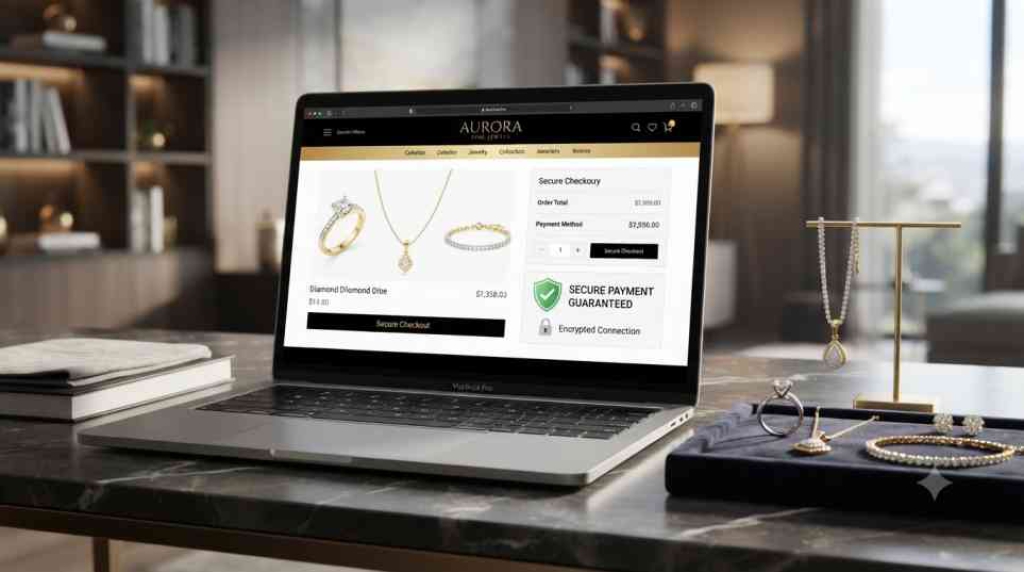
Buying jewelry online is exciting, but it also comes with some risks. Customers are not just buying a ring, necklace, or bracelet. They are also sharing their personal details, home addresses, and payment information. When they buy expensive jewelry, they want to feel safe at every step.
Imagine a customer ordering an engagement ring online. If their payment details or delivery address are stolen, the problem goes beyond losing money. Their personal information could also be used for fraud.
This is why security should be a top priority when building an online jewelry store. A safe shopping experience helps customers trust your business, complete their purchases, and return for future orders.
In this guide, we will explain how to protect customer accounts, secure payments, manage high-value orders, and keep your online store safe. Whether you are starting a new jewelry business or improving an existing one, these steps can help you build a platform that customers trust.
Build Trust Into the Store From the First Click
Customer trust starts before checkout. When people visit your jewelry website, they want clear product information, simple policies, and signs that their personal details are safe.
Show Shoppers What They Are Buying
Jewelry is often a high-value purchase. Customers need accurate information before making a decision. Your product pages should clearly explain:
Metal details: Mention whether the jewelry is made from gold, silver, platinum, or another material.
Gemstone information: Explain the type, quality, cut, and weight of the gemstone.
Size and weight: Provide correct ring sizes, chain lengths, and product weights.
Care instructions: Tell customers how to clean and protect their jewelry.
Product images: Use clear photos from different angles so shoppers can see the actual design.
If you sell diamonds or other precious stones, explain where grading reports come from. Avoid making claims that you cannot prove.
You should also follow the Federal Trade Commission (FTC) Jewelry Guides when describing precious metals and gemstones. These guidelines help businesses provide honest product information and avoid misleading customers.
Make Privacy and Safety Easy to See
Customers should not have to search for basic information about your store. Add easy-to-find links to your privacy policy, shipping policy, return policy, and warranty details.
Your privacy policy should explain what customer information you collect, why you collect it, and how you protect it.
For example, tell customers if you collect their name, email address, phone number, delivery address, or payment-related information.
Also, avoid using promises like "100% unhackable" or "completely risk-free." No online platform can guarantee perfect security. Instead, explain the real safety steps your business follows.
Reduce Doubt Without Adding Friction
A long or confusing checkout process can make customers leave without buying anything.
Baymard Institute research shows that the average online shopping cart abandonment rate is close to 70%. Unexpected costs, complicated checkout steps, and a lack of trust are common reasons behind this problem.
To make shopping easier:
Offer guest checkout so customers do not have to create an account.
Provide trusted payment options.
Show shipping charges and taxes before the final payment.
Make your customer support details easy to find.
Keep forms short and simple.
A smooth shopping experience helps customers feel comfortable and complete their orders.
Protect Accounts, Payments, and Customer Data
A jewelry website stores valuable customer information. This may include names, contact details, order history, and payment records. If this information falls into the wrong hands, customers and the business can face serious problems.
Good security practices help reduce these risks.
Use Strong Account and Access Controls
Not every employee needs access to every part of your online store. For example, a customer support employee may need to view order details but does not need access to payment settings.
Follow these steps to protect staff accounts:
Use multi-factor authentication (MFA): Ask staff to verify their identity with an additional step when logging in.
Set role-based access: Give employees access only to the information and tools they need for their work.
Use unique accounts: Avoid sharing login details between team members.
Remove old access: Disable accounts when an employee or service provider leaves your business.
Review permissions: Check staff access regularly to make sure it is still required.
These simple steps can prevent unauthorized users from accessing important business information.
Keep Payment Data Out of Your Systems Where Possible
Payment security is one of the most important parts of an online jewelry store. Customers should feel safe when entering their card details.
The best approach is to work with a trusted payment provider that follows Payment Card Industry Data Security Standard (PCI DSS) requirements.
Here are some useful practices:
Use a PCI DSS-compliant payment provider.
Choose tokenized payment methods so your store does not need to handle raw card details.
Never store card security codes (CVV).
Keep payment software updated.
Check that payment pages and related services follow PCI DSS 4.0.1 requirements.
Tokenization replaces sensitive card information with a unique digital token. This reduces the amount of payment data your website needs to handle.
When planning jewelry website development, payment security should be included from the beginning rather than added after the website is launched.
Secure Customer Data at Rest and in Transit
Customer information needs protection whether it is moving between systems or stored in your database.
Start by using HTTPS across your entire website. This helps protect information shared between customers and your website.
You should also:
Encrypt sensitive customer records.
Use secure database settings.
Limit access to private information.
Delete customer data when it is no longer needed.
Keep regular backups of important business information.
Bruce Schneier, a well-known security expert, once said, "Security is a process, not a product."
This means that installing one security tool is not enough. You must continue checking, updating, and improving your website's security.
Design Checkout and Order Checks for High-Value Jewelry
A jewelry store needs extra care because many products are expensive. A fraudulent order can result in financial loss, delivery problems, and customer complaints.
Your checkout process should be simple for genuine buyers but strong enough to identify suspicious activity.
Make Checkout Clear and Hard to Tamper With
Customers should understand every step of the payment process. Avoid unnecessary forms, confusing buttons, and unexpected charges.
Follow these practices:
Display the complete order cost before payment.
Use secure payment forms.
Show clear order summaries.
Avoid unnecessary checkout redirects.
Test payment pages after every major update.
You should also review third-party scripts running on checkout pages. These scripts may come from analytics tools, marketing platforms, chat services, or other providers.
If a third-party script is unsafe or changed without your knowledge, it could create security problems.
Limit unnecessary scripts and regularly check for unexpected changes to checkout pages.
Add Sensible Checks for Costly Orders
An order for a low-cost accessory may not need the same checks as an expensive diamond necklace.
For high-value purchases, your store can use additional order verification methods.
For example:
Flag unusually large orders for manual review.
Check for repeated failed payment attempts.
Review unusual changes to delivery addresses.
Use additional verification when an order appears risky.
Contact customers through verified contact details when necessary.
However, avoid making the buying process difficult for every customer. Use extra checks only when there are signs of possible fraud.
This balance helps protect your business without frustrating genuine buyers.
Protect Shipment Details and Delivery
Security does not end after payment. Jewelry delivery also needs careful planning.
A stolen package can damage customer trust and cost your business money.
Here are some ways to make delivery safer:
Share tracking links through trusted email or SMS channels.
Use signature confirmation for expensive orders.
Choose reliable shipping partners.
Limit employee access to customer delivery addresses.
Avoid sharing unnecessary order details with third parties.
For valuable jewelry, consider suitable shipping insurance and proof of delivery.
You should also explain your shipping and delivery process clearly. Customers should know when their order will arrive and what happens if a package is delayed or lost.
Prepare for Breaches, Fraud, and Service Disruptions
Even businesses with strong security systems can face cyberattacks, fraud, or technical problems. The important thing is to prepare before something goes wrong.
A good response plan can help reduce damage and restore normal business operations faster.
Set a Response Plan Before an Incident
Every online jewelry business should have a basic security response plan.
Your team should know what to do if customer information is exposed, payment fraud increases, or the website stops working.
Your plan should include:
A person responsible for managing the incident.
Contact details for hosting and payment providers.
Steps for identifying and controlling the problem.
A process for informing affected customers when required.
A plan for restoring website services.
You should also run practice exercises so employees understand their responsibilities.
Do not wait until a security problem happens to decide who should handle it.
Back Up the Store and Keep It Patched
Imagine your jewelry website suddenly stops working because of a technical issue or cyberattack. Without a backup, you could lose product information, customer orders, and important business records.
To avoid this situation, create regular backups of:
Product information and images.
Customer and order records.
Website files and databases.
Important store settings.
Keep backups in a separate, secure location and test them regularly to make sure they work.
You should also update your website platform, plugins, themes, and other software. Old software may contain security weaknesses that attackers can use.
Learn From Real Incidents
Real-world cyberattacks show why businesses must take website security seriously.
In 2018, British Airways suffered a cyberattack that affected around 429,000 customers and staff, according to the UK's Information Commissioner's Office (ICO).
The incident highlighted the risks connected to payment-page scripts and third-party services.
The main lesson for jewelry businesses is simple: every tool connected to your checkout process needs proper attention. Review the services you use and remove tools that are no longer necessary.
Another important point comes from IBM's 2024 Cost of a Data Breach Report. It estimated the global average cost of a data breach at $4.88 million.
Although the actual cost varies between businesses, this figure shows why prevention is a smart business investment.
Make Security Part of Daily Store Operations
Website security is not a one-time task. Your business needs regular checks, employee training, and proper monitoring to keep customer information safe.
Check the Platform on a Regular Schedule
Set a regular schedule to review your website's security.
During these checks, focus on:
Reviewing employee and vendor access.
Checking payment gateway settings.
Scanning the website for known security issues.
Updating outdated software and plugins.
Reviewing website activity for unusual behavior.
Recording major security changes and approvals.
If you are planning a new online store, working with professional website development services can help you build security into the platform from the beginning.
A well-planned website is easier to manage, update, and protect as your business grows.
Train Staff to Spot Common Scams
Technology alone cannot protect your business. Employees also play an important role in keeping your online store safe.
Train your team to recognize common online scams, such as fake payment messages, suspicious emails, and unusual refund requests.
Ask employees to follow these practices:
Use strong and unique passwords.
Enable multi-factor authentication.
Never share login information.
Verify unusual payment or refund requests.
Report suspicious emails and website activity.
Avoid opening unknown links or attachments.
You should also create a simple process for reporting security problems. Employees should feel comfortable reporting suspicious activity without worrying about blame.
If you are working with an external software development company, make sure its team follows similar security practices when accessing your website or customer information.
Measure Whether Safeguards Work
You cannot improve website security if you do not know what is happening.
Track important security activities to understand whether your protection methods are working.
Some useful things to monitor include:
Failed login attempts.
Suspicious account activity.
Payment fraud and chargebacks.
Customer account takeovers.
High-value orders flagged for review.
Customer complaints about checkout problems.
Review these numbers regularly. If you notice unusual activity, investigate it and take action.
Give every security problem a clear task owner and deadline. This makes it easier to track improvements and prevent the same issues from happening again.
Conclusion: Make Safe Shopping Part of the Jewelry Experience
Building a successful online jewelry store is about more than attractive product photos and beautiful website designs. Customers also want to know that their payment details, personal information, and valuable orders are protected.
From the first website visit to final delivery, security should be part of every step of the shopping experience.
Strong account protection, secure payment systems, careful order checks, safe delivery methods, and regular website updates can help reduce risks.
If you are planning to launch a new jewelry store or improve an existing one, use this simple checklist:
Remember, customers are more likely to buy from a jewelry store when they feel safe and confident. By making security a core part of your jewelry website development strategy, you can protect your customers, build long-term trust, and create a better online shopping experience.
Latest Posts
-
Why Your Jewelry Business Needs a Professional eCommerce Website
-
Custom Ecommerce Website Development for Growing Businesses: Build for the Next Stage

-
Why Is Your Jewellery Website Not Generating Sales? Find and Fix the Biggest Barriers

-
Jewelry Website Development: A Simple Guide to Secure Payment Gateways
-
Best Ecommerce Website Features for Jewellery Businesses That Turn Browsers Into Buyers