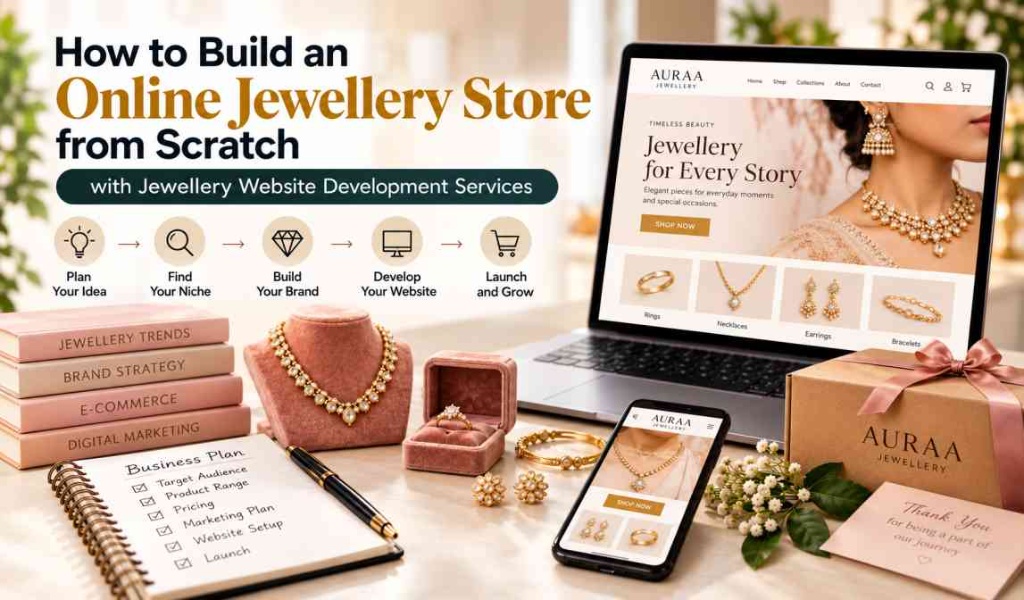
How to Build an Online Jewellery Store from Scratch with Jewellery Website Development Services
Starting an online jewellery store in India can be a great business idea. You may have beautiful designs, quality materials, and a passion for jewellery. But having great products is not always enough. Customers also want to trust your brand, understand your products, and feel safe while shopping online.
This is where jewellery website development services can help. They can help you build a professional online store with a simple design, secure payment options, useful features, and a smooth shopping experience.
India has a strong jewellery market, with customers buying gold, silver, diamond, artificial, and handmade jewellery for weddings, festivals, gifts, and daily wear.
In this guide, you will learn how to build an online jewellery store from scratch, choose the right products, set your prices, create your website, and prepare for your first order.
1. Turn Your Jewellery Idea into a Business Plan
Before building your website, understand your business idea. A clear plan helps you avoid spending money on products or features that your customers may not need.
Find a Niche Your Customers Can Recognize
Start by deciding who you want to sell to. Think about your customers' age, budget, style, shopping habits, and needs.
For example, you could focus on:
Daily wear silver jewellery
Artificial jewellery for college students
Bridal jewellery for weddings
Custom name necklaces
Handmade earrings and bracelets
Lightweight gold jewellery
Choose one main customer group and build your collection around it.
For example, you could say, "We sell affordable daily wear jewellery for young Indian women."
This simple statement helps customers understand your brand and what makes it different.
Test Demand Before Buying Stock
Do not invest in a large collection right away. First, check if people want your products.
Study online marketplaces, competitor reviews, social media comments, and search trends. Look for popular styles, customer questions, and common complaints.
You can also ask five to ten potential buyers about their favourite designs, budgets, and shopping problems.
Start with a small collection or test pre-orders if your business model allows it. This can help you understand demand before spending too much money.
Choose How You Will Make or Source Jewellery
There are different ways to manage your jewellery business:
Handmade: You make each piece yourself.
Wholesale: You buy ready-made jewellery from suppliers.
Made-to-order: You make products after receiving orders.
Private label: A supplier makes products that you sell under your brand.
Check product quality, minimum order quantity, delivery time, material details, and return terms before working with a supplier.
For example, a small jewellery maker could test ten designs at a local exhibition or market, collect customer feedback, and then launch the most popular designs online. This is a practical example of a low-risk approach.
2. Build a Jewellery Brand People Remember
Your brand is more than a logo. It includes your product quality, packaging, customer service, and shopping experience.
Set Prices That Cover All Your Costs
Your selling price should cover more than the cost of materials.
Include:
Materials and gemstones
Labour and production
Packaging
Payment processing fees
Shipping costs
Returns and damage allowance
Marketing expenses
Here is a simple example of pricing a handmade ring.
The ₹500 left is a contribution before other overheads, taxes, and unexpected costs. It is not necessarily your final profit.
For gold jewellery, remember to consider metal rates, making charges, applicable taxes, wastage policies, and other relevant costs.
Always explain your pricing clearly so customers know what they are paying for.
Choose a Name, Look, and Brand Story
Pick a store name that is easy to spell, say, and remember. Check domain availability and possible trademark conflicts before making a final choice.
Create a simple brand style guide. Choose your main colours, photo style, packaging, and writing tone.
Share your real brand story. Explain why you started the business, who makes your jewellery, and what makes your products special.
Jeff Bezos is often associated with this line: "Your brand is what other people say about you when you're not in the room."
This idea is useful for jewellery businesses. Good branding depends on consistent product quality, honest communication, and reliable service.
Make Material and Care Details Clear
Indian jewellery buyers may have questions about purity, plating, gemstones, and durability.
Mention details such as:
Metal type and purity, where relevant
Gemstone details
Plating and finish
Ring size or chain length
Cleaning and storage instructions
For gold jewellery, follow applicable BIS hallmarking and disclosure requirements. Explain purity and hallmark details accurately.
If you claim that your jewellery is recycled, fair-trade, or conflict-free, keep proper proof. Avoid claims that you cannot support.
3. Set Up an Online Jewellery Store
Once your business plan and brand are ready, you can start building your website.
Choose an Ecommerce Platform and Domain
Select a platform that fits your budget and business needs.
Compare platforms based on setup costs, payment options, design flexibility, inventory tools, and future growth.
Your website should have:
A mobile-friendly design
Secure payment options
Easy product management
Stock tracking
Simple checkout steps
Support for Indian payment methods
Depending on your business needs, you may offer UPI, cards, net banking, and eligible wallet options through a suitable payment provider.
Choose a domain that matches your brand name where possible.
If you need help with design, development, product filters, payment setup, or custom features, professional jewellery website development services can make the process easier.
If you want a professional online store, working with a reliable website development company can be a good choice. A skilled team can help you create a custom design, add product filters, set up payment options, and improve the mobile shopping experience. Before hiring a company, check its past projects, ecommerce experience, pricing, and support services. Choose a team that understands your business goals and can build a store that is easy for customers to use.
Replace the placeholder link with your actual service page URL before publishing.
Create the Important Website Pages
Your online jewellery store should include these pages:
Home: Introduce your brand and popular products.
Shop: Organise products into clear categories.
Product pages: Show prices, images, sizes, and details.
About Us: Share your brand story.
Contact: Provide a clear way to reach you.
Shipping and Returns: Explain delivery times and return rules.
FAQ: Answer common questions.
Privacy Policy: Explain how customer data is handled.
Clearly mention shipping charges, delivery estimates, return conditions, refund timelines, and customer support details.
Make sure your website policies follow the Indian laws and rules that apply to your business, including relevant consumer protection, privacy, ecommerce, and tax requirements.
Test your website on both mobile and desktop before launch.
Photograph Jewellery So Customers Can Judge It
Good product photos can help shoppers feel confident.
Use clear images with a plain background. Add different views, close-up shots, and photos of someone wearing the jewellery.
Show the size with a ruler, hand, or another common object. You can also add short videos showing shine, movement, clasps, and fit.
For Indian customers, showing jewellery with ethnic wear and western outfits can help them understand how it may look on different occasions.
Keep your photo style consistent across the store.
4. Create Product Pages That Build Trust
Your product page helps customers decide whether to buy. It should answer their questions without making them search for information.
Write Clear Product Titles and Descriptions
Use simple and useful product titles.
For example, instead of writing "Beautiful Moonlight," use "Silver Moon Pendant Necklace."
Include important details such as material, stone, size, colour, weight where relevant, and style.
Your product description should explain:
What the product is made of
What size or length it comes in
What is included in the package
How to clean and store it
How long delivery may take
Use search terms naturally, such as "daily wear earrings" or "bridal jewellery online." Avoid repeating the same keyword again and again.
Add Trust Signals to Your Store
Online shoppers cannot touch or try jewellery before buying. Your website must help reduce their doubts.
Add genuine customer reviews, clear contact details, secure payment options, and easy-to-find policies.
Baymard Institute's research has placed average online cart abandonment at around 70%. The exact rate varies by study and website, but it shows why a simple checkout matters.
Show shipping costs and delivery estimates early. Avoid surprise fees at checkout.
For higher-value jewellery, explain insurance, secure shipping, tracking, and delivery procedures where applicable.
Only use customer photos with their permission, and never create fake reviews.
Make Product Selection Easy
Jewellery sizing can be confusing, especially for online shoppers.
Help customers choose the right product by adding:
Ring size guides
Chain length charts
Bracelet size details
Product filters
A contact option for questions
If you sell bridal or traditional jewellery, organise collections by occasion, style, and budget.
Ask someone who has never used your website to find a product, check its size, and complete checkout. Their feedback can help you find problems.
5. Launch Your Store and Start Getting Orders
Once your website is ready, it is time to introduce your brand to customers.
Create a Simple Launch Plan
Start building interest before your store goes live.
You can create an email or WhatsApp subscriber list with proper consent by offering early access or product previews.
Share behind-the-scenes videos, product photos, styling ideas, and your launch date on social media.
You can also work with small Indian creators whose audience matches your target customers.
Start with a small advertising budget only after your website, product pages, and checkout work properly.
For SEO, use clear page titles, helpful content, descriptive image alt text, and logical website links. Make sure important product pages can be found by search engines.
Remember that SEO takes time. Do not expect instant sales just because your website is live.
Pack and Ship Orders with Care
Jewellery is often small, delicate, and valuable. Good packaging can protect your products and improve the customer experience.
Choose packaging that fits your brand without adding unnecessary costs.
Before launch, decide:
How quickly orders will be packed
Which shipping service you will use
How tracking information will be shared
What happens if an order is lost or damaged
How returns, repairs, and refunds will work
Use suitable protective packaging and shipping options based on the value of your products.
For high-value orders, consider suitable shipping insurance and delivery verification.
Reply to customer questions politely and quickly. Good service can encourage repeat purchases.
Track Results and Improve Your Store
After launch, use real data to understand what is working.
Track these key numbers:
Website visitors
Add-to-cart rate
Completed sales
Average order value
Return rate
Repeat purchases
Also, check which products and marketing channels bring sales.
For example, imagine a store receives 1,000 visitors in its first month but gets only 10 orders. The owner finds that product photos are unclear and shipping costs appear late.
In the next month, the owner improves photos and displays shipping details earlier. If sales improve, this may suggest the changes helped. However, other factors, such as traffic quality and seasonal demand, should also be considered.
This is an illustrative example, not actual store performance data.
Focus on fixing the biggest problems first instead of changing everything at once.
6. Your First-Week Action Plan
You do not need to build a huge store on day one. Start small and take practical steps.
Here is a simple checklist:
Define your target customer and product range.
Price three sample products with all costs included.
Ask five potential buyers for honest feedback.
Prepare your shipping, returns, and jewellery care details.
Create one strong product page and test it on your phone.
These small steps can help you build a stronger foundation for your business.
Frequently Asked Questions (FAQs)
1. How much does it cost to build an online jewellery store in India?
The cost depends on your website design, features, platform, and product range. A basic store may cost less, while a custom ecommerce website with advanced features may need a bigger budget. Include your domain, platform, payment fees, marketing, shipping setup, and maintenance costs in your budget. Ask developers for a clear quotation before starting.
2. How do I start an online jewellery business with no experience?
Start by choosing a small product range and a clear target audience. Research competitors, test your products with potential buyers, and calculate your costs. Then build a simple website with clear product details, payment options, and shipping policies.
3. Which platform is best for an online jewellery store in India?
The best platform depends on your needs and budget. Compare ecommerce platforms based on ease of use, Indian payment options, product management, design flexibility, shipping integrations, and growth options before making a choice.
4. Why do I need jewellery website development services?
Jewellery website development services can help you create a professional store with mobile-friendly design, payment integration, product filters, and useful shopping features. They can also help improve website usability and customer experience.
5. How can I get my first order for my online jewellery store?
Start by sharing your store with your target audience through Instagram, WhatsApp with consent, email, and personal networks. Use clear product photos, helpful descriptions, and simple checkout steps. You can also test small marketing campaigns and improve your store based on customer feedback.
6. How can I make my jewellery website rank on Google?
Use relevant keywords in page titles, headings, product descriptions, and image alt text where appropriate. Publish helpful content, improve website speed, make your site mobile-friendly, and create clear internal links. SEO takes time, so track your results and improve your pages regularly.
7. What pages should an online jewellery store have?
A jewellery store should include a Home page, Shop page, Product pages, About Us, Contact, Shipping and Returns, FAQ, and Privacy Policy pages. These pages help customers understand your brand, products, and policies before buying.
8. How can I build trust with online jewellery shoppers?
Share accurate material details, clear product photos, honest delivery times, genuine customer reviews, secure payment options, and easy-to-find return policies. Good product quality and helpful customer service also help build long-term trust.
9. Do I need GST registration to sell jewellery online in India?
GST requirements depend on your business model, turnover, sales channels, and applicable rules. Certain ecommerce sales may have specific registration requirements or exceptions. Check the latest GST rules or speak with a qualified tax professional before launching.
Conclusion
Building an online jewellery store from scratch takes planning, patience, and attention to detail.
Start by choosing a clear niche, testing product demand, setting fair prices, and creating a brand people can trust. Then build a user-friendly website with helpful product pages, clear policies, good photos, and a smooth checkout.
Professional jewellery website development services can support you with website design, development, payment integration, mobile optimisation, and other store features based on your needs.
But remember, a website alone does not guarantee sales. Your success also depends on product quality, customer service, pricing, and marketing.
Launch with a focused collection, listen to your customers, and improve one step at a time. A simple, trustworthy store is a good place to start.
Latest Posts
-
How to Design Jewellery Category Pages That Help Shoppers Find the Right Piece
-
How to Build an Online Jewellery Store from Scratch with Jewellery Website Development Services
-
How to Choose Between a Website and a Mobile App
-
What Makes Jewellery Website Development Different From Other eCommerce Websites?
-
Jewelry Website Development in 2026: The Hidden Truth Most Agencies Won’t Tell You