Common Jewellery Website Development Mistakes to Avoid and How to Fix Them
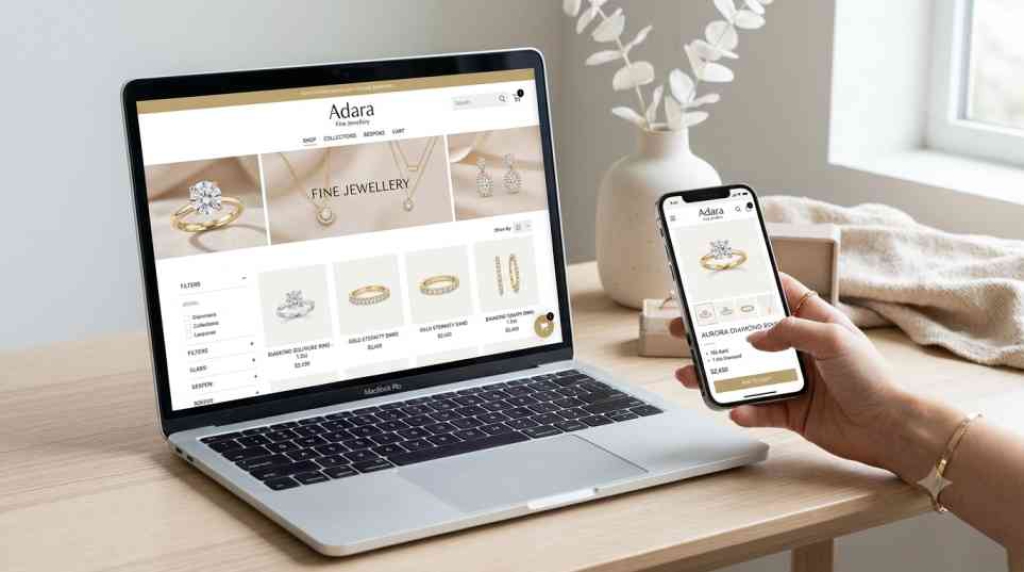
Imagine a customer finds a beautiful ring on your website. They like the design, but they cannot see the details clearly. They are unsure about the ring size, product quality, or delivery time. They may leave without buying anything.
This is where good Jewellery Website Development makes a real difference. A well-designed website helps customers explore products, find answers, and shop with confidence.
Jewellery is a special purchase for many people. Buyers want to know what they are paying for, how the jewellery will look, and whether they can trust the seller.
In this blog, we will cover common jewellery website mistakes and simple ways to fix them. These tips can help you improve the shopping experience and turn more visitors into customers.
1. Make the Mobile Shopping Journey Easy to Use
Many customers browse jewellery on their phones. If your website is hard to use on a small screen, they may leave before finding the right product.
Don't Treat Mobile as a Smaller Desktop Site
A mobile website should be easy to use on its own. Menus should be simple, text should be easy to read, and buttons should be large enough to tap.
Keep important features such as search, filters, size options, and product details easy to find. Avoid making customers zoom in or scroll too much to get basic information.
Fix Slow Pages Before Adding More Features
Large images, extra scripts, and unnecessary effects can make your website slow.
Google reported in The Need for Mobile Speed that 53% of mobile site visits were abandoned if a page took longer than three seconds to load (2016).
To improve speed:
Compress product images without losing too much quality.
Remove features and scripts that are not needed.
Improve page loading, especially on product and checkout pages.
Test your website speed on mobile devices.
A fast website helps customers browse products without frustration.
Test the Full Journey on Real Phones
Do not check only your homepage. Test the complete shopping journey, from search to payment.
Ask someone to find a specific ring, choose a size, add it to the cart, and complete checkout. Watch where they get confused. Test on different phones and browsers to find problems.
2. Show Jewellery Clearly and Answer Product Questions
Jewellery often has small details that are hard to see in a single photo. Customers need clear product information before making a purchase.
Don't Rely on One Small Product Photo
Use multiple high-quality images for every product. Show the jewellery from different angles and include close-up shots of stones, patterns, and finishes.
You can also add:
Images showing how the piece looks when worn.
Scale images to help customers understand its size.
Zoom features for small details.
Short videos where they help explain the design.
These features help shoppers understand what they are buying.
Give Useful Facts Beside the Product
A beautiful photo is not enough. Customers also need correct product details.
Include information such as:
Metal type, purity, and finish.
Stone type, size, and grading details where available.
Product weight and dimensions.
Ring sizes and other size options.
Jewellery care instructions.
Making time and estimated shipping time.
If a product is made to order, clearly explain how long it may take to prepare and ship.
Help Shoppers Compare Pieces with Confidence
Good filters help customers find products faster. Add filters for metal, stone, style, price, and size.
For example, a shopper looking for a gold ring should be able to narrow down the options without opening every product page.
You can also study the 360-degree diamond views offered by James Allen. This is a useful example of how online jewellery stores can help buyers inspect products from different angles.
3. Build Trust Before Asking for Payment
Jewellery can be an expensive purchase. Customers need clear reasons to trust your business before they share their payment details.
Make Prices and Policies Easy to Find
Do not hide important information in small text or hard-to-find pages.
Clearly explain:
Product price and applicable taxes.
Shipping charges and delivery estimates.
Return and exchange rules.
Ring resizing options and costs.
Warranty and repair services.
Payment and refund policies.
Show the full cost as early as possible. Surprise charges at checkout can make customers leave.
If you offer certificates, explain what they cover and who issued them.
Back Up Quality Claims with Clear Proof
Avoid making claims like "best quality" without giving customers useful proof.
For diamond jewellery, share available grading reports and explain details such as cut, colour, clarity, and carat weight in simple words.
You can also build trust through real customer reviews, clear product descriptions, jewellery care guides, and information about your brand or makers.
Only share certificates, reviews, and quality claims that you can verify.
Avoid Trust Signals That Feel Vague or Forced
Fake countdown timers, unclear discounts, and false stock warnings can damage customer trust.
Instead, use honest product information and clear service policies.
You can review established jewellers such as Blue Nile to understand how product details and service information are presented. Compare these features with your own website to find missing information. The goal is not to copy another store but to make your own website more helpful.
4. Remove Friction from Search, Cart, and Checkout
Customers should not have to work hard to buy jewellery. A confusing search system or long checkout process can cost you sales.
Make Search and Filters Match How People Shop
Your website search should understand common product names and shopping terms.
For example, customers may search for "gold hoop earrings," "oval diamond ring," or "silver chain."
Use clear product categories and helpful filters. Let visitors sort products by price, popularity, and newest arrivals.
Also, show a useful message when no results are found and suggest similar products.
Keep Checkout Short and Predictable
Baymard Institute reports an average cart abandonment rate of around 70% across its studies. This does not mean every abandoned cart is caused by checkout problems, but it shows why the buying process deserves attention.
To make checkout easier:
Offer guest checkout.
Provide common and trusted payment methods.
Ask only for necessary details.
Show delivery estimates.
Display the complete order cost before payment.
Keep forms simple and easy to complete.
A short checkout process helps customers finish their orders with less effort.
Make Cart Changes Simple
Customers may want to change a ring size, update quantity, or remove a product.
Let them make these changes without starting again.
Show product names, selected sizes, prices, shipping details, and return terms near the order total. If gift wrapping is available, make the option easy to find.
5. Protect Search Visibility, Speed, and Accessibility
A jewellery website should work well for both people and search engines. Good website development supports visibility, usability, and long-term growth.
Build Pages That Search Engines Can Read
Every important product and category page should have a clear, unique title and useful meta description.
For example, instead of using "Ring 101" as a page title, use a clear title such as "18K Gold Diamond Rings."
Also:
Write useful product descriptions.
Add descriptive image alt text.
Use relevant internal links.
Add accurate product structured data.
Keep product URLs clear and useful.
Structured data can help search engines understand product details, but it does not guarantee special search results or higher rankings.
Avoid Pages That Are Hard to Use or Maintain
Make sure your website is easy for different people to use.
Check text size, colour contrast, keyboard navigation, and form labels. Customers should be able to browse products and complete checkout without unnecessary barriers.
Keep stock details, prices, product links, and size options updated. Incorrect information can hurt both trust and sales.
Measure the Fixes That Matter
Do not make website changes based only on guesswork.
Track useful metrics such as:
Mobile page loading time.
Product page exits.
Search usage and search failures.
Add-to-cart rate.
Checkout drop-offs.
Completed orders.
Fix the biggest problems first. Test one change at a time where possible and compare the results.
Turn Common Website Mistakes into More Confident Sales
A jewellery website should do more than display beautiful products. It should help customers see, understand, and trust what they are buying.
Start with these five improvements:
Make mobile shopping simple.
Use clear images and complete product details.
Show prices and policies openly.
Make search and checkout easy.
Improve website speed, SEO, and accessibility.
Your action plan: Visit your website as a customer. Search for a product, check its details, add it to the cart, and try the checkout process. Note every confusing step and fix the biggest problem first.
Good Jewellery Website Development is not only about looks. It is about making every step easy and clear. When customers can see the product, understand the price, and trust your service, they have more confidence to buy.
Frequently Asked Questions (FAQs)
1. What is Jewellery Website Development?
Jewellery Website Development is the process of creating a website for a jewellery business. It includes website design, product pages, images, search features, payment options, and checkout. A good website helps customers browse products and shop with confidence.
2. What are the common jewellery website development mistakes?
Common mistakes include slow loading pages, poor mobile design, low-quality product images, missing product details, unclear return policies, and a confusing checkout process. Fixing these issues can improve the shopping experience.
3. Why is mobile-friendly design important for a jewellery website?
Many customers use mobile phones to browse and buy jewellery. A mobile-friendly website makes it easier to view products, select sizes, check prices, and complete payments. It can also help reduce customer frustration.
4. How can I make my jewellery website more trustworthy?
You can build trust by showing clear product details, real customer reviews, secure payment options, transparent prices, and easy-to-find return policies. Share genuine certificates and quality information whenever available.
5. How can I improve the SEO of my jewellery website?
Improve SEO by using clear page titles, helpful product descriptions, relevant keywords, descriptive image alt text, internal links, and accurate product structured data. Also, improve website speed and make sure important pages can be found by search engines.
Latest Posts
-
Best Ecommerce Website Features for Jewellery Businesses That Turn Browsers Into Buyers
-
Common Jewellery Website Development Mistakes to Avoid and How to Fix Them
-
How to Design Jewellery Category Pages That Help Shoppers Find the Right Piece
-
How to Build an Online Jewellery Store from Scratch with Jewellery Website Development Services
-
How to Choose Between a Website and a Mobile App